 This was produced in Wichita KS and Moscow the week of June 18th,2000,for the Korean War 50th Year Anniversary Series on World News Tonight.
This was produced in Wichita KS and Moscow the week of June 18th,2000,for the Korean War 50th Year Anniversary Series on World News Tonight.
This is a streaming file for 56k-low bandwith at 320x240 pixels
(about double the usual web video size)

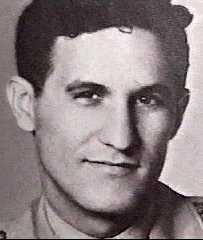
Maj.Felix Asla/USAF
Other Viewing Options(all in Real Player Format)
Secret Soldiers
By Sheila MacVicar
P O D U L S K, R U S S I A, June 23 — Terry Asla
was just a boy when his father, Felix, an ace
American fighter pilot, went off to the Korean
War, never to return.
“There was no clear-cut indication he
was dead,” Asla said. “He was last seen
over the Yalu River in a dog fight.”
For decades, there was no more
news. The answers, finally, came from a
most unlikely place. They were hidden in
the military archives of the former Soviet
Union — declassified top-secret
documents that provided startling detail
of the USSR’s secret war against the
United States and its allies in Korea.
The Soviets, it turns out, were more involved than
previously thought.
American Danz Blasser has spent years looking for
American servicemen missing in Korea. He found out
what happened to Terry Asla’s father in the declassified
documents. There, he read that a Capt. Ivanov shot down
an F-86 with a tail number that matched Felix Asla’s
plane. The Soviets retrieved the wreckage and found his
body.
“I served in the Air Force, too, and it’s like one of my
brothers in arms who’s died,” Blasser says.
The archives of the old Soviet Union show that it was
Soviet pilots in their MIG-15s who flew 70 percent of the
combat missions against the Americans. And Soviet pilots
who were responsible for the majority of American air
combat casualties. It was an Air Force in disguise. The
Soviet pilots put on Chinese uniforms. The markings on
their planes were changed. They were even ordered to
communicate over the radio in Chinese.
Possible Escalation
But this didn’t always work perfectly. Russian pilot Dmitri
Samoilov, who was credited with shooting down 10 U.S.
or allied planes, is proof of that.
“In the middle of an attack, I was supposed to figure
out how to say something in Chinese,” he says. “Of
course, we used Russian. And of course, we knew
everyone could hear us.”
But until the end of the Cold War, Mr. Samoilov
couldn’t tell anyone where he had earned his medals.
“If we had fought openly, it probably would have
come to nuclear weapons,” he says. “And who wanted
that? Americans? Russians? It would have been terrible.”
There were reasons for U.S. officials to keep the
secret as well. They worried that if the American public
knew the truth, they might demand an escalating war
against the Soviet Union.
But American fighter pilots like Robert Lund certainly
knew who their highly skilled opponents were.
“We were aware of Russia’s involvement, primarily
because of the skill level of some of the pilots,” he says.
“Not a great amount but a few.”
If the opening of the Soviet archives shows just how
dangerous a time that was, it has also finally brought some
peace to families of Americans who fought and vanished
in Korea.
“Patience is a virtue in something like this. The years
that we had tried to find out information, at one time or
another, it simply wasn't available. The amazing thing, you
know, knowledge wants to be free, and eventually those
kind of things will come,” says Terry Asla.
It just took 50 years to do it.
